
HIGH SCHOOL PORTFOLIO
HIGH SCHOOL CERAMICS UNIT
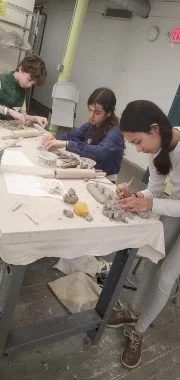
This three-lesson ceramics unit introduces students to hand-building, three-dimensional form, surface design, craftsmanship, and individual artistic expression. Students explore historical and contemporary ceramic artists while developing skills through culturally informed research, sculptural problem-solving, and functional pottery.
LESSON 1: NATIVE AMERICAN–INSPIRED COIL POT
Description:
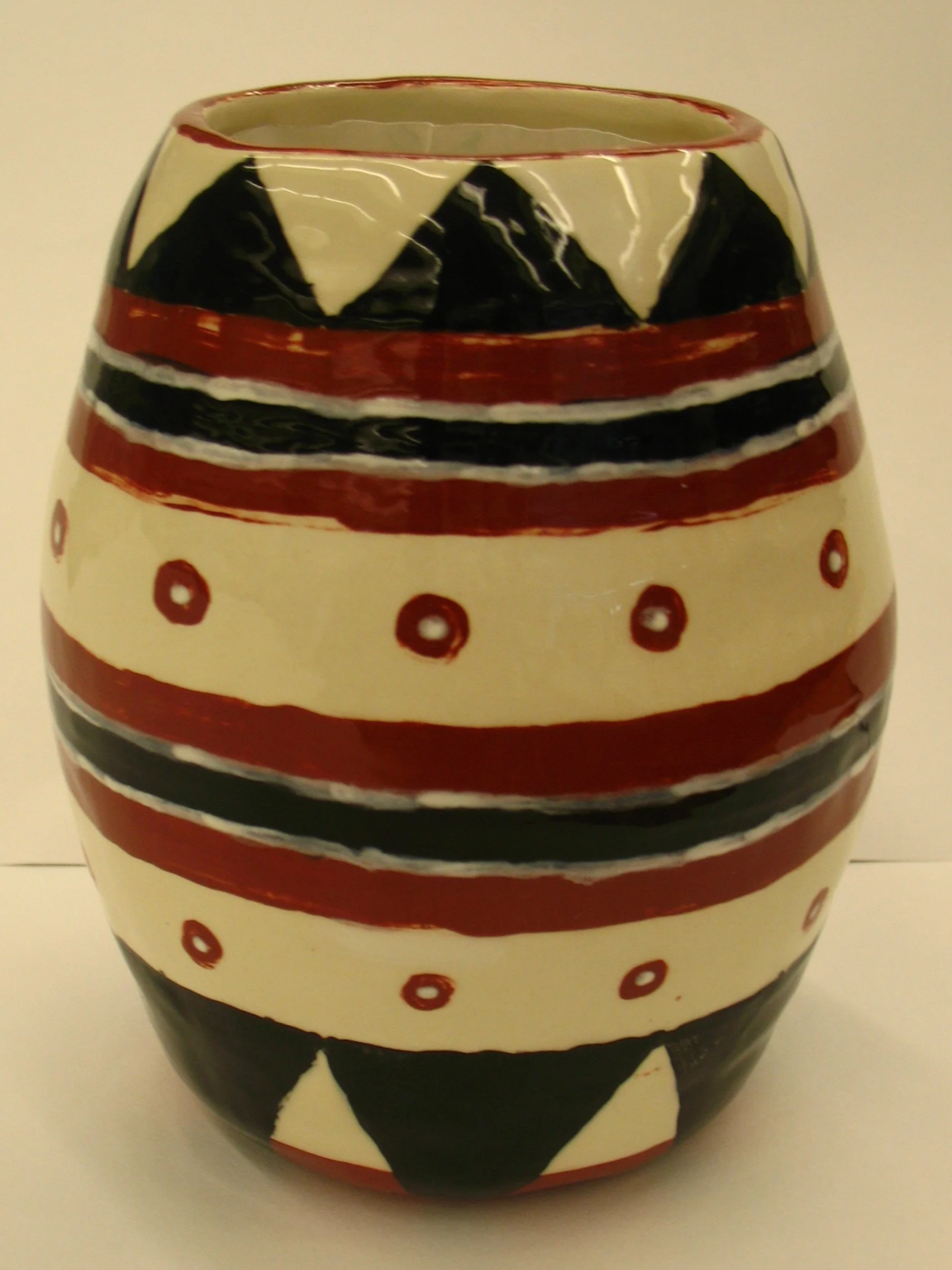
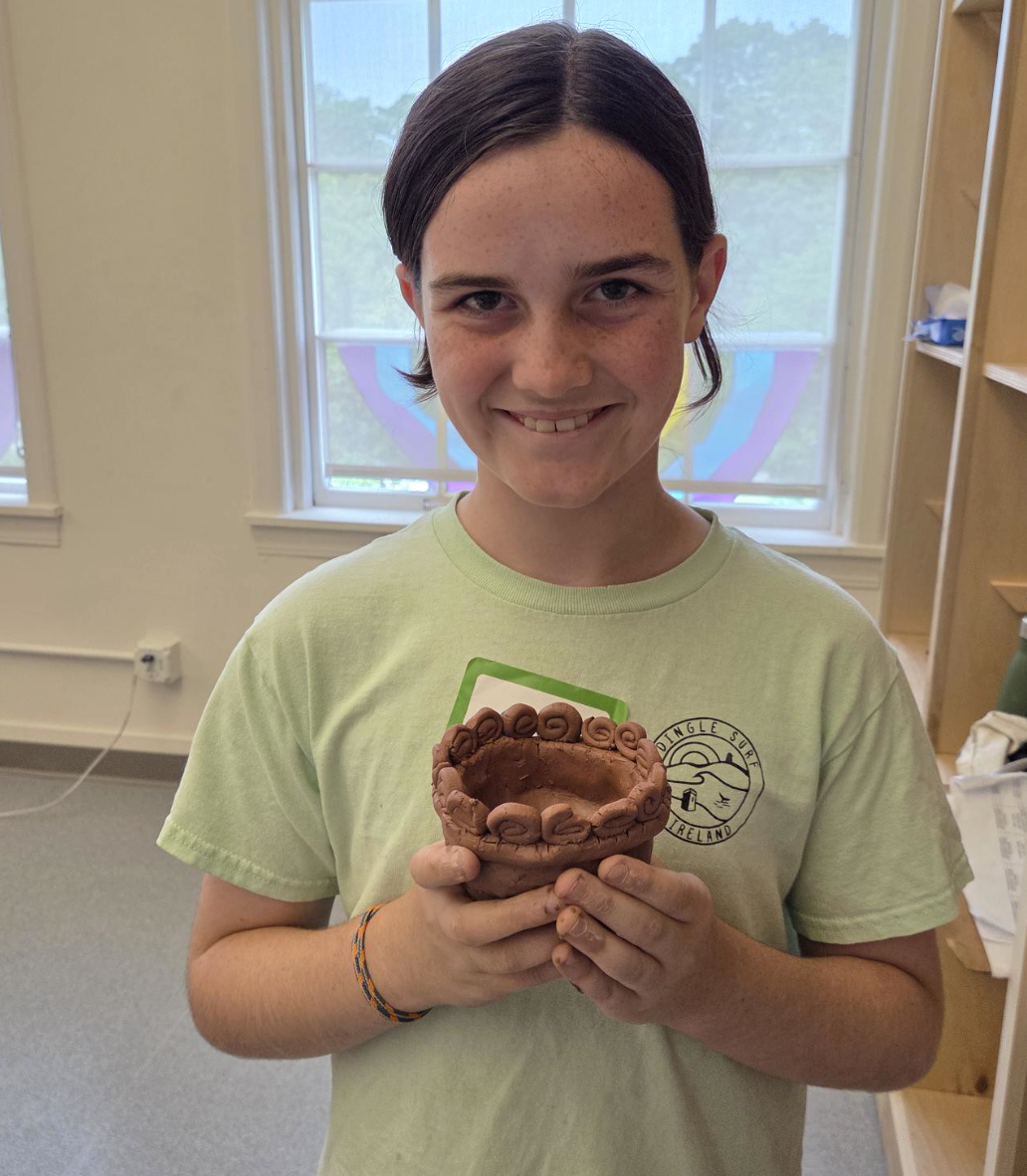
Students study Pueblo pottery, particularly the work of Maria and Julian Martinez, and create a small hand-coiled vessel with an original surface design informed by their research.
Differentiated Learning:
Students may begin with a simple cylindrical vessel and minimal surface design, or create a more complex form with an altered silhouette, an asymmetrical shape, a carved texture, or a repeated surface pattern. Students who need additional support may use a visual construction guide and teacher demonstration, while advanced students can independently develop a more sophisticated vessel and surface treatment.
Objectives:
Construct a stable vessel using evenly rolled coils and secure joins.
Use shape, texture, and pattern to create an intentional surface design.
Explain how research influenced at least one artistic decision.
Art Element: Texture
Design Principle: Rhythm
Art Vocabulary:
Coil: A long, rolled strand of clay used to build a form.
Burnish: To polish a clay surface by rubbing it with a smooth tool or stone.
Artists:
Historical Artist — Maria Martinez: San Ildefonso Pueblo potter known for hand-coiled, burnished pottery, created in collaboration with Julian Martinez.
Present-Day Artist — Virgil Ortiz: Contemporary Cochiti Pueblo artist whose work connects Pueblo ceramic traditions with contemporary ideas and imagery.
Instructions:
Examine examples of Pueblo pottery and identify characteristics such as form, surface, texture, contrast, and pattern.
Sketch two possible vessel shapes before beginning construction.
Roll several even coils and join them carefully using scoring and slip.
Build upward, smoothing and compressing the interior while maintaining an intentional exterior texture.
Refine the rim and overall silhouette.
Develop an original surface design based on your observations and research rather than copying a specific traditional design.
Complete a short written reflection explaining one construction choice and one design choice.
Assessment:
Students complete a stable hand-built vessel and explain how research informed their construction or surface-design choices.
Rubric:
Criteria: 4 — Exceeds 3 — Meets 2 — Developing 1 — Beginning.
Construction:
Coils are even and secure, and form is highly stable.
Coils are mostly even and securely joined.
Some coils or joins need repair.
Construction is incomplete or unstable.
Surface Design:
Original, sophisticated design enhances the form.
Original design supports the vessel.
Design is present but needs development.
Design is incomplete or copied.
Cultural Understanding
Research is thoughtful, accurate, and clearly influences choices.
Research informs artistic choices.
Research is limited.
Research is missing or misunderstood.
Craftsmanship:
Form and surface are exceptionally refined.
Work is carefully finished.
Some areas need refinement.
Work is unfinished or rushed.
LESSON 2: CLAY ANIMAL
Description:
Students transform an observed animal into a three-dimensional clay sculpture by simplifying its anatomy into basic forms while using pose and texture to communicate personality.
Differentiated Learning:
Students may create a simple animal using basic geometric forms, such as a rounded body, four legs, and a head, or develop a more detailed sculpture with accurate proportions, expressive movement, anatomical details, and surface texture. Students who prefer drawing may work from multiple reference photographs before beginning the sculpture.
Objectives:
Translate an animal's two-dimensional appearance into three-dimensional form.
Construct a stable clay sculpture using appropriate joining and hollowing techniques.
Use pose and texture to communicate the animal's personality.
Art Element: Form
Design Principle: Movement
Art Vocabulary:
Hollow: Removing excess clay from a sculpture to prepare the form for firing.
Texture: The actual or visual surface quality of an object.
Artists:
Historical Artist — Pablo Picasso: Picasso created numerous ceramic works featuring simplified and expressive animal forms; his ceramic practice included animal and bird imagery.
Present-Day Artist — Paula Bellacera: A contemporary artist whose ceramic animal sculptures explore animal behavior, personality, and the relationship between humans and animals.
Instructions:
Select an animal and make two quick sketches from different views.
Identify the animal's largest basic forms.
Construct the body using clay forms that can be hollowed out appropriately.
Add the head, legs, ears, tail, or other important identifying features.
Score and slip every major connection.
Create texture that helps communicate the animal's surface or personality.
Check that the sculpture is stable and appropriately constructed for firing.
Complete a short reflection describing how your pose communicates the animal's personality.
Assessment:
Students create a stable, appropriately hollowed animal sculpture with recognizable anatomy and at least one intentional expressive or textural choice.
Rubric:
Criteria: 4 — Exceeds 3 — Meets 2 — Developing 1 — Beginning
Form & Anatomy:
The animal is highly recognizable, with thoughtful, expressive anatomy.
The animal is recognizable with appropriate major forms.
Some anatomy is recognizable but needs refinement.
The animal is difficult to identify.
Construction:
Sculpture is stable, securely joined, and appropriately hollowed.
Sculpture is stable and appropriately hollowed.
Some construction areas need repair.
Sculpture is unstable or incomplete.
Expression:
Pose and texture strongly communicate personality or movement.
Pose or texture communicates character.
Some expression is present.
Expression is limited or unclear.
Craftsmanship:
Surface is exceptionally refined.
Sculpture is carefully finished.
Some areas need refinement.
Work is incomplete or rushed.
LESSON 3: CARTOON-FACED MUG
Description:
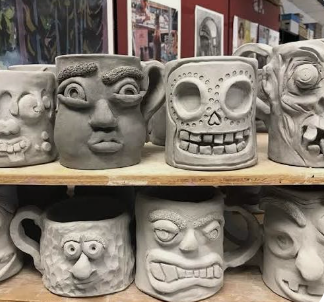
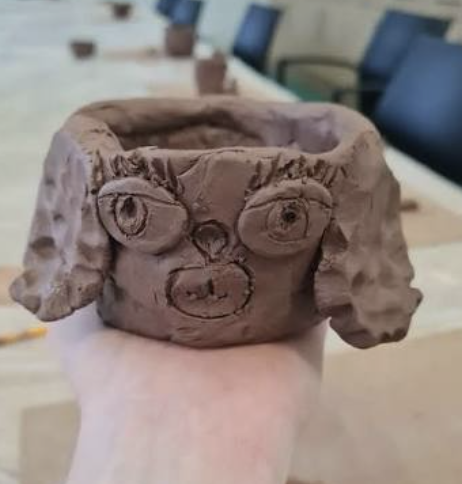
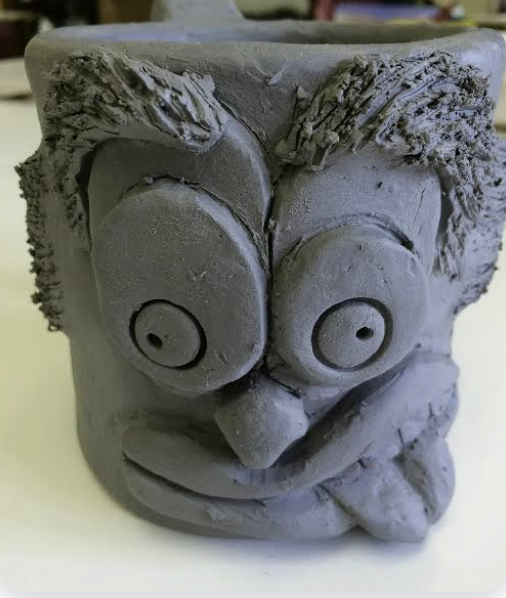
Students hand-build a functional ceramic mug and create an expressive cartoon face that becomes part of the vessel's three-dimensional design.
Differentiated Learning:
Students may create a simple cylindrical mug with two eyes and a mouth, or develop a more sophisticated character with an altered mug shape, expressive facial features, dimensional additions, surface texture, and a distinctive handle. Students may choose between a simple drawn face, carved face, or dimensional clay features.
Objectives:
Construct a functional mug with an appropriately attached handle.
Create an expressive cartoon face using simplified shapes and lines.
Integrate the character design with the mug's three-dimensional form.
Art Element: Shape
Design Principle: Proportion
Art Vocabulary:
Score and Slip: A process used to roughen and join two pieces of clay securely.
Glaze: A glass-like coating applied to ceramic ware that changes during firing.
Artists:
Historical Artist — Pablo Picasso: Picasso frequently simplified human and animal features into expressive forms and incorporated faces and figures into his ceramic work.
Present-Day Artist — Rami Kim: A contemporary ceramic artist known for functional vessels, including mugs and planters animated by simple sculpted facial features.
Instructions:
Sketch two possible mug shapes and two possible cartoon faces.
Choose a mug shape that is comfortable to hold and use.
Construct the mug using an appropriate hand-building technique.
Create and securely attach the handle.
Add, carve, or paint the facial features.
Check the proportion and placement of the face around the curved surface.
Refine the surface and prepare the mug for firing.
Apply glaze or appropriate surface treatment after the bisque firing.
Evaluate how the character's expression and the mug's form work together.
Assessment:
Students create a functional ceramic mug with a secure handle and an expressive cartoon face that is intentionally integrated into the vessel.
Rubric:
Criteria: 4 — Exceeds 3 — Meets 2 — Developing 1 — Beginning
Construction
Mug is highly stable, functional, and exceptionally well-constructed.
Mug is stable and functional.
Mug functions but needs repair.
Mug is unstable or incomplete.
Character Design
Face is highly expressive, original, and carefully developed.
Face clearly communicates an expression.
Face is recognizable but needs development.
Face is incomplete or unclear.
Integration
Facial features enhance the three-dimensional form.
Features work well with the form.
Some features need repositioning or refinement.
Features do not yet work with the form.
Craftsmanship
Surface and glaze are exceptionally controlled and polished.
Surface is complete and carefully finished.
Some areas need refinement.
Work is incomplete or poorly finished.