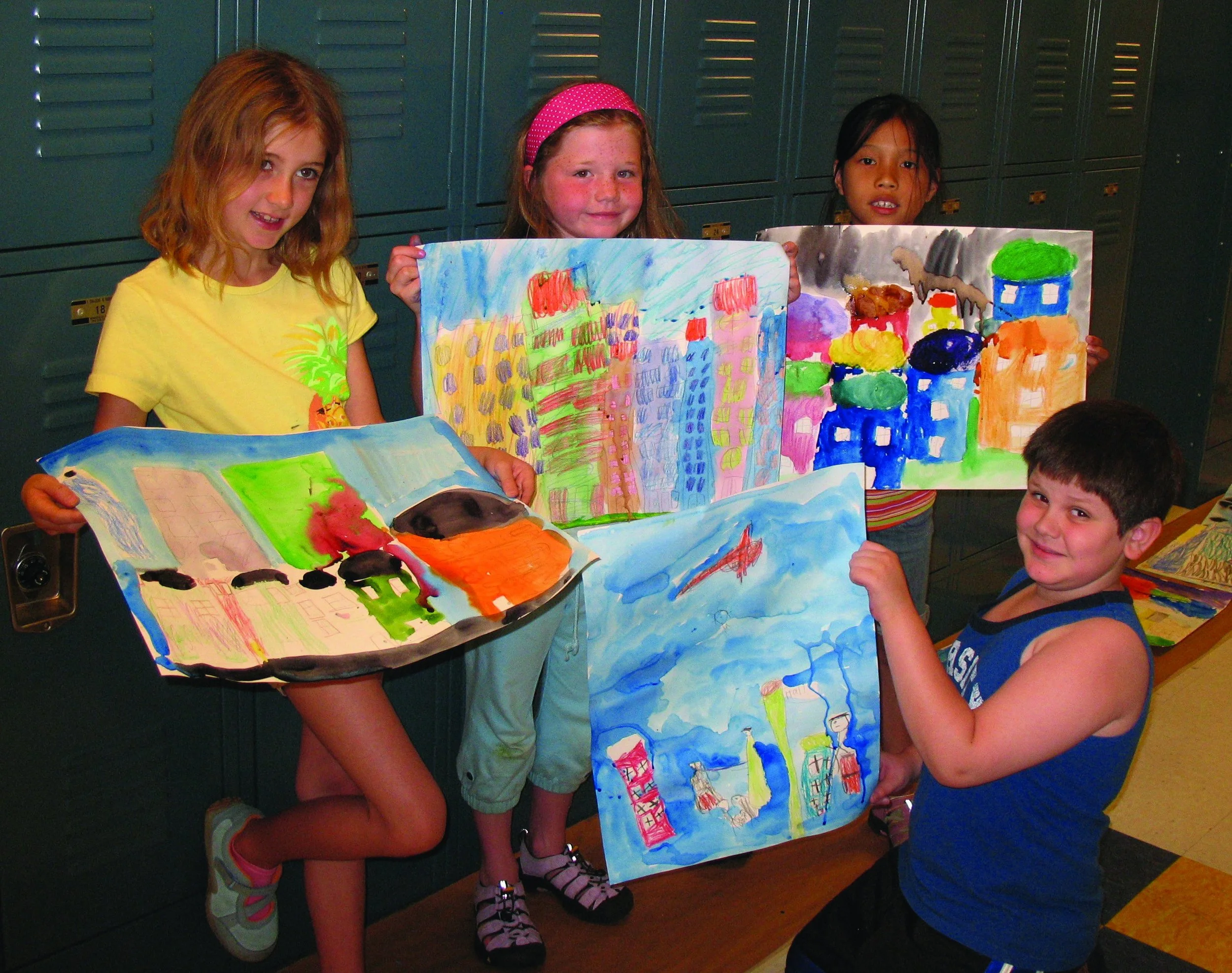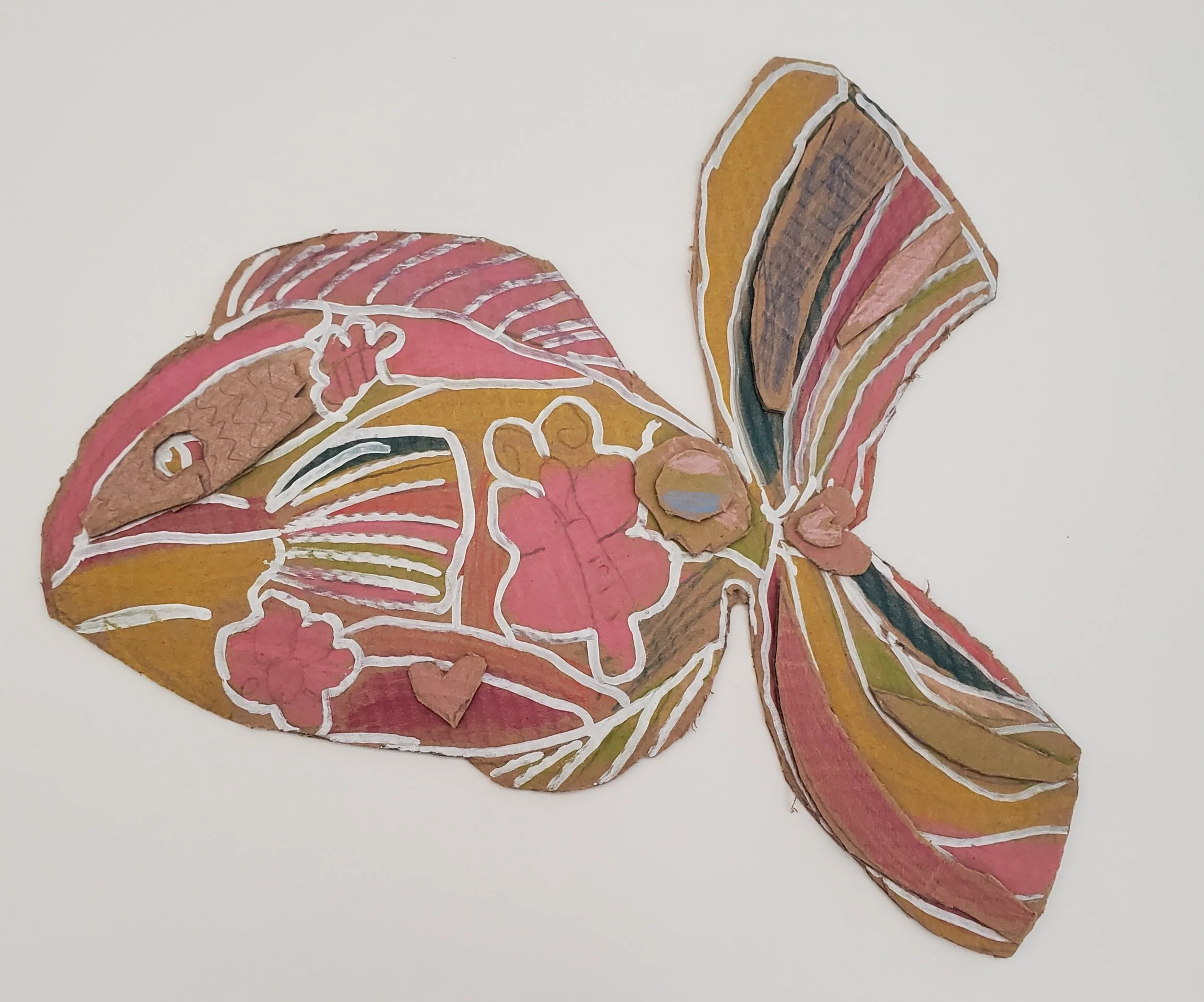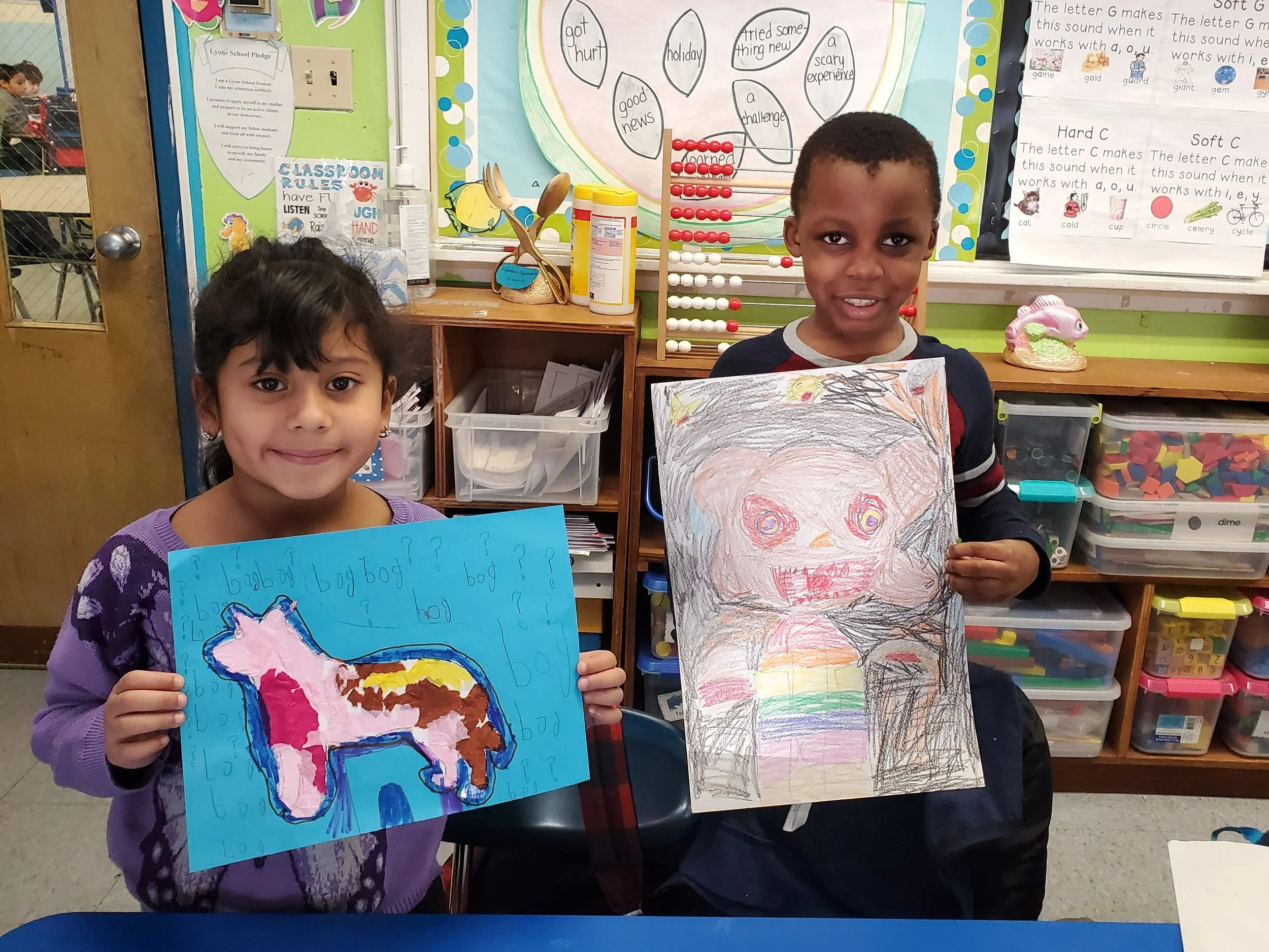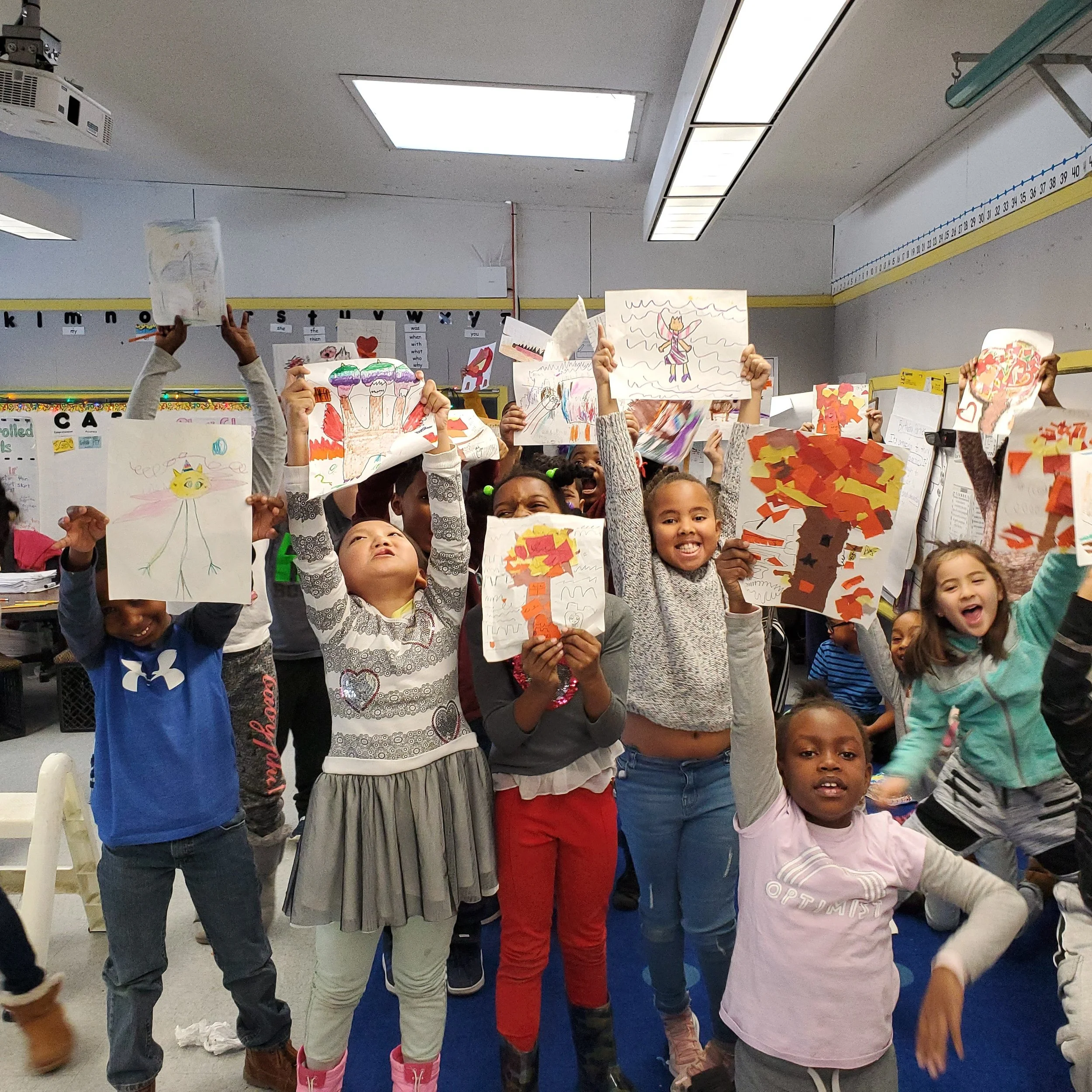
Elementary Art Portfolio


ELEMENTARY ART: PAINTING UNIT
Three-Lesson Unit: Animal Painting, Abstract Painting, and Simple Landscape Painting
This three-lesson painting unit develops observation, color, composition, brush control, and artistic confidence. Students explore three different approaches to painting while making choices appropriate to their individual skill levels. Each lesson provides opportunities for students to work with simple shapes and guided steps or extend their learning through greater detail, experimentation, and independent choices.
DIFFERENTIATED LEARNING
All students work toward the same essential art concepts while choosing an appropriate level of challenge. Students may use visual references, templates, guided shapes, step-by-step demonstrations, reduced detail, additional detail, or independent composition.
LESSON 1: ANIMAL PAINTING
Students observe an animal and use basic shapes, color, texture, and pattern to create a painted animal that becomes the focal point of the composition.
OBJECTIVES
• Identify basic shapes and features when observing an animal.
• Use controlled brushwork and intentional color choices.
• Add texture or pattern to communicate details about the animal.
• Explain one artistic choice made in the painting.
DIFFERENTIATED LEARNING
Beginning: Use a simple animal reference, shape guide, or teacher-drawn example.
Developing: Add observed features, patterns, texture, and a simple habitat.
Extending: Enlarge or crop the animal, add detailed texture, or create a more complex environment.
VOCABULARY
Observation
Shape
Texture
Pattern
Composition
ELEMENT OF ART
Shape
PRINCIPLE OF DESIGN
Emphasis
ARTIST CONNECTION
Paula Bellacera is a contemporary artist whose paintings and ceramic sculptures explore animals through expressive forms, color, personality, and storytelling.
PROCESS
Choose an animal and carefully observe its overall shape.
Lightly sketch the largest shapes first.
Add important features that make the animal recognizable.
Paint the largest areas first.
Add smaller details, patterns, and texture.
Add a simple or detailed background.
Step back and make one final improvement to the composition.
ASSESSMENT
Students complete an animal painting that demonstrates observation, intentional use of paint, and at least one detail that makes the animal the focal point.
STUDENT CHECKLIST
Animal is recognizable.
Large shapes are included.
Color is used intentionally.
Texture or pattern is included.
Background is complete.
One final improvement was made.
Name is included.
RUBRIC
4 – I can do this independently and add extra detail.
3 – I can do this independently.
2 – I can do this with some help.
1 – I am beginning to learn this skill.
I observed my animal carefully.
I used paint carefully.
I used color intentionally.
I added texture or pattern.
I completed my background.
I made a final improvement.
LESSON 2: ABSTRACT PAINTING
Students create an abstract painting using lines, shapes, colors, patterns, and repeated marks without needing to represent a recognizable object.
OBJECTIVES
• Use line and shape to organize a composition.
• Experiment with color and repeated marks.
• Use contrast or repetition to create visual interest.
• Describe how one artistic choice affects the feeling of the artwork.
DIFFERENTIATED LEARNING
Beginning: Use 3–5 large shapes and a limited color palette.
Developing: Experiment with different lines, shapes, colors, and patterns.
Extending: Add layers, contrasting colors, repeated visual motifs, or more complex patterns.
VOCABULARY
Abstract
Contrast
Pattern
Repetition
Composition
ELEMENT OF ART
Color
PRINCIPLE OF DESIGN
Repetition
ARTIST CONNECTION
Mildred Thompson was an American artist known for abstract painting and sculpture. Her work demonstrates how lines, shapes, color, and movement can communicate ideas and energy without depicting a recognizable object.
PROCESS
Fill the paper with several large shapes or flowing lines.
Choose a color plan.
Paint the largest areas first.
Add repeated marks, patterns, or contrasting shapes.
Look at the entire composition from a distance.
Identify the strongest area and make one final improvement.
ASSESSMENT
Students create a complete abstract composition and explain one use of color, repetition, contrast, line, or shape.
STUDENT CHECKLIST
I used lines or shapes.
I made intentional color choices.
I included repetition or contrast.
I filled the space thoughtfully.
I made one final improvement.
I can explain one artistic choice.
My name is included.
RUBRIC
4 – I can do this independently and experiment with additional ideas.
3 – I can do this independently.
2 – I can do this with some help.
1 – I am beginning to learn this skill.
I used line and shape.
I made intentional color choices.
I used repetition or contrast.
I filled the space.
I made a final improvement.
I can explain one artistic choice.
LESSON 3: SIMPLE LANDSCAPE PAINTING
Students create a landscape using a horizon line, overlapping shapes, and intentional color choices to show space and distance.
OBJECTIVES
• Use a horizon line to organize a landscape.
• Use overlapping forms to show space.
• Make intentional color choices for the sky, land, and focal areas.
• Create a foreground, middle ground, and/or background.
DIFFERENTIATED LEARNING
Beginning: Use a simple three-part landscape guide.
Developing: Add overlapping forms, details, and a focal point.
Extending: Experiment with scale, value, color temperature, atmospheric effects, or a more complex composition.
VOCABULARY
Landscape
Horizon
Foreground
Middle Ground
Background
Focal Point
ELEMENT OF ART
Color
PRINCIPLE OF DESIGN
Space
ARTIST CONNECTION
Kathline Carr is a contemporary Massachusetts-based artist whose work explores landscapes through observation, layering, mark-making, and abstraction.
PROCESS
Draw a horizon line to separate the sky and land.
Add simple forms such as trees, hills, buildings, water, or paths.
Create a foreground, middle ground, and/or background.
Paint the largest areas first.
Change color, size, or value to suggest distance.
Add a focal point.
Step back and make one final improvement.
ASSESSMENT
Students create a landscape that demonstrates spatial organization through a horizon line and overlapping forms and includes at least one intentional color choice.
STUDENT CHECKLIST
I included a horizon line.
I created a foreground, middle ground, and/or background.
I used overlapping shapes.
I made intentional color choices.
I included a focal point.
I made a final improvement.
My name is included.
RUBRIC
4 – I can do this independently and add extra detail.
3 – I can do this independently.
2 – I can do this with some help.
1 – I am beginning to learn this skill.
I used a horizon line.
I showed different areas of space.
I used overlapping shapes.
I made intentional color choices.
I included a focal point.
I made a final improvement.
UNIT ASSESSMENT
Students are assessed on their ability to:
• Observe and identify important visual information.
• Use painting materials appropriately.
• Make intentional choices about color, shape, texture, and composition.
• Apply the techniques demonstrated in class.
• Complete and revise their artwork.
• Explain at least one artistic choice.
SIMPLE UNIT RUBRIC
4 – I work independently, use the skills confidently, and add my own ideas.
3 – I demonstrate the skills taught in the lesson and complete my artwork independently.
2 – I demonstrate some of the skills but need reminders or assistance.
1 – I am beginning to develop the skills and need significant support.
REFLECTION
What is one choice you made in your artwork that you are proud of?
What is one thing you would change or try differently next time?
What did you learn about painting?